
Considering the current state of the UK’s international education industry, I am reminded of the management and life lessons contained in the bestselling business book Who Moved My Cheese?
Although some think it trite, Dr Spencer Johnson’s work has sold over 30 million of copies since its 1998 publication and is translated into 37 different languages. Its homespun wisdom resonated in a pre-social media, pre-AI world. It is a very simple, concise, and somewhat quirky allegory. And its central messages may still be relevant in the attention-scarce dystopia in which most of the UK’s higher education institutions, businesses, and those who manage them, find themselves operating in 2026.
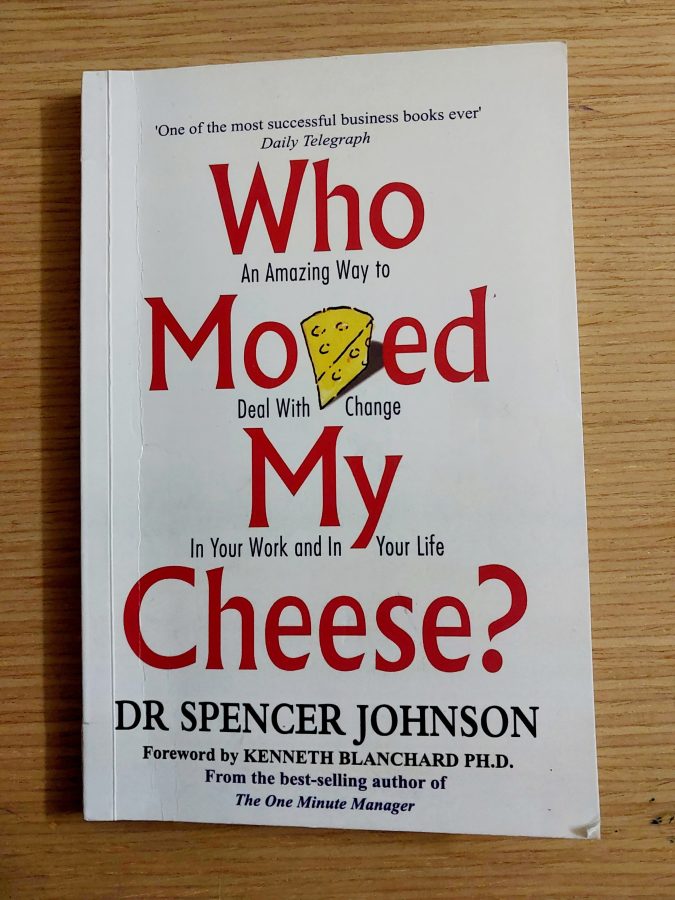
A classic?
Its central characters are two mice – named Scurry and Sniff – and two Littlepeople, the size of mice – named Hem and Haw. All wear running shoes and travel around their local area of a vast maze, which contains stores of, unsurprisingly, cheese. Mutual comradeship between the characters is forged because of the plentiful supplies of cheese they find in a part of the maze called Cheese Station C.
The Littlepeople have no idea how the cheese gets there each day, but they are secure in the knowledge that it is tasty and abundant in supply. This makes them feel extremely comfortable and self-satisfied with their success in life.
This scene setter is like the situation UK higher education found itself in the most recent boom years. HESA data shows that new entrants of inbound overseas domiciled students reached 459,180 in 2022-3, the peak year. This was double the number from a decade earlier (+231,330) and almost x2.6 the 2006-07 volume of 176,920.*
Against the backdrop of limited constraints and a favourable post-study work regime for those that wished to stay on after graduation, many in charge of commercial operations marvelled at their own brilliance, as queues of students beat a path to their doors. Plentiful cheese.
When the cheese in Cheese Station C is “suddenly” exhausted, the mice adapt with agility, searching far and wide through the maze in symbiotic partnership for new cheese supplies. They were aware that the old cheese had been deteriorating for some time in quality and stock levels. During the time of plenty, they kept their running shoes around their necks in case, sensing they may be needed for future cheese quests.
The mice are like the UK higher education players that have tried to deploy a strategy of diversification, edging away from total reliance on inbound international students. Coventry, Liverpool, Liverpool John Moores and East London universities are amongst the transnational education (TNE) market leaders by volume.
India branch campuses are another diversification play in the UK’s single largest source market for inbound students. Aberdeen, Bristol, Coventry, Southampton, Liverpool, Queen’s University Belfast (QUB), York, Lancaster, Birkbeck and Surrey have all taken that step with already established or planned campuses.
The mice are also like the organisations that have readied themselves for changing times through merger. The London and South East University Group (LASE), the UK’s first multi-university group, brings together the University of Greenwich and the University of Kent. The new group has four campuses across South East London, Medway and Kent. The claim of its protagonists is that “From the outset, our conversations were centred on potential, not survival”.
Others seem to have set less ambitious growth targets, carefully managed their cost base, or prioritising quality over volume – in other words battening down the hatches when the storm is visible on the horizon. The vice-chancellors of Sunderland and University of East Anglia were reported as having adopted this strategy in a Times Higher Education article back in April. In that same article, the pro-vice chancellor of Nottingham Trent University was quoted as saying “We don’t have a strategic intention that we are growing our student numbers over x number of years.”
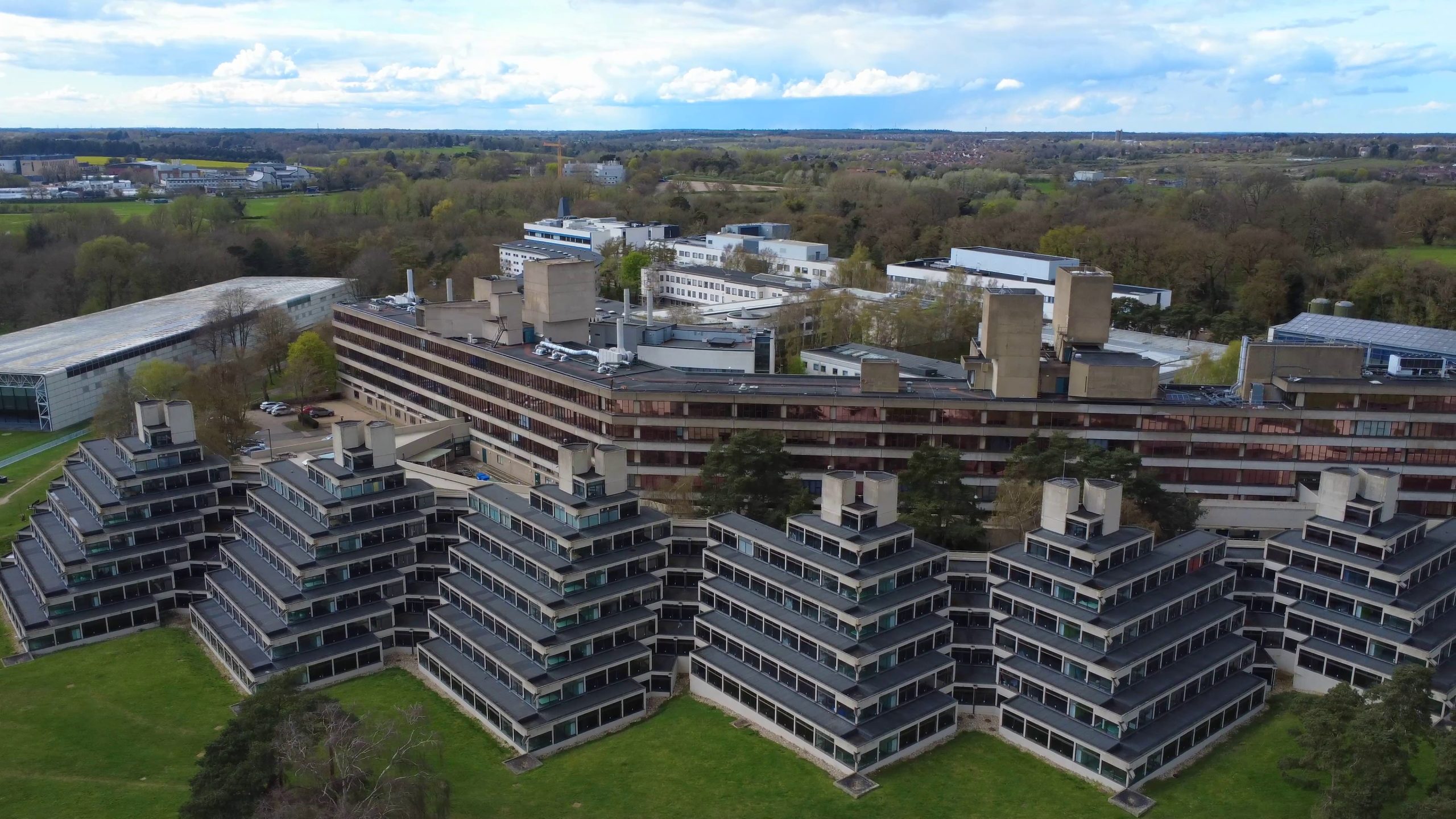
Less ambitious targets: University of East Anglia
In the private sector, UK-based education providers have long since reached beyond their core business models. Pathway businesses such as Cambridge Education Group (CEG), Oxford International Education Group (OIEG) and QA Higher Education have all pivoted away from a focus on the programmes that used to underpin their once-strong EBITDA growth.
Following on from its forays into overseas pathway provision in various countries, Cambridge Education Group also offers online degrees under the CEG Digital brand. Back in 2021, it acquired iheed, a Dublin-based provider of postgraduate medical courses.
It runs services for universities such as recruitment, admissions support and managed campuses in its CEG Services division. It now also manages the new University of Hull London campus in Stratford, and partners with the University of Northumbria to provide flexible routes into higher education for adult learners in the North East of England. Amongst many other moves, Oxford International Education Group has focused energy onto its Digital Institute business, delivering English testing and online English programmes.
QA runs branch campuses in UK cities for a range of universities, including a Birmingham and London campus for Swansea University, and also delivers online university degrees, such as two cyber security Master’s programmes in partnership with Northumbria University.
Whilst admirable, it doesn’t follow that any of these moves will be a success or come near to replacing the inbound international student revenues that underpinned previous growth waves.
For example, Coventry University Group’s innovations – thousands of TNE students, campuses in London, Egypt, Morocco, Warsaw and (even more oddly) Scarborough – did not stop the university from running a huge deficit and requiring a plan to save £95m over 3 years aimed at getting it back to a break-even position in 2025-26.
Aside from Coventry, several of the UK universities entering India have also been operating at a deficit, including QUB and Aberdeen, leading to accusations that their expansive actions are deluded. The private providers mentioned above have shown great agility, but their financial performance has not been so stellar in recent times.
Adventure and adaptation may not lead the institutions and companies to a new cheese supply straight away. Or if they do find it, the cheese may just simply be not as good a quality. But by not standing still, they at least have a chance to survive in the scary new world where new cheese is hard to come by.
Whilst the mice are off on essential new adventures, the Littlepeople sit around feeling sorry for themselves. Hem and Haw just cannot understand why the cheese station is now empty. Who moved it? Debating possible causes of the cheese shortage, and alternative courses of action, they opt for inaction. They expect the cheese to be restocked any day. The situation does not make sense. They had worked hard to find Cheese Station C, and they deserve ongoing success. Its disappearance is just not fair. And anyway, unlike the mice, they cannot remember where they have left their running shoes!
Plenty of commercial decision-makers in the sector are no doubt suffering from similar procrastination. The UK sector at least has the advantage of knowing who moved the cheese – it is the government.
And it is not just immigration policies that have created this environment. Successive governments’ lack of long-term strategic vision is central to the problem. Capping domestic student fee levels at below the level of inflation have made it uneconomic for universities to deliver courses for British undergraduates and pushed them towards a dependence on international students.

Strategic vision? Lucy Powell, the latest in a long line of Secretaries of State for Education
The sector’s anger that the goalposts have moved is understandable. However, this is to underplay the part of some universities in their own downfall. Many institutions have been playing close to the edge of the rules for years, most recently seen in the madness of the rush by several post-1992 universities to boost MRes enrolments, as a workaround to the new immigration rules for bringing dependants to the UK.
Haw reflects. He gradually becomes more self-aware and starts to see the situation differently. Haw re-finds his footwear and sets out into the maze in search of new cheese. He is unable to persuade the intransigent Hem to join him, and so his friend stays put, waiting hungrily in a still-empty cheese store, wallowing in his self-pity, paralysed by inaction and philosophically opposed to change. But it’s better late than never for Haw.
What exactly is the best response for late-to-the-party HE organisations? New forays into TNE have a clear attraction, as is directly encouraged by government strategy, but despite this encouragement TNE still only represents a small proportion of export revenues.
According to the recent Higher Education Sector Action Plan, in support of the UK’s International Education Strategy “UK universities now educate nearly 700,000 learners overseas through TNE arrangements across 229 host countries and territories. Participation has increased substantially over recent years with student numbers growing by 36.6% over the past five years. Government estimates suggest that TNE contributes around £840 million annually to education export related earnings (around 3% of total higher education export earnings)…”
If TNE cannot be ramped up fast enough, and unless (due to its relatively low value per student) delivered at a scale that is unrealistic for most, then further cost-cutting seems a more viable option.
As Haw explores the maze afresh, he develops self-knowledge, grows spiritually, and in the process learns some valuable lessons in life and organisational change. The journey is not straightforward, there are false starts, dead ends, and promising cheese stores with only a few crumbs of cheese left. Revelations reveal themselves to him and he writes them on the maze walls in a cheese-shaped outline, as if in tablets of stone, hoping Hem will follow them as a signposted trail of truisms, if he ever decides to follow (a moment of jeopardy which is ultimately unresolved). These include gems such as:
- If You Do Not Change, You Can Become Extinct.
- Smell The Cheese Often So You Know When It Is Getting Old.
- Movement In A New Direction Helps You Find New Cheese.
- The Quicker You Let Go Of Old Cheese, The Sooner You Can Enjoy New Cheese.
- Old Beliefs Do Not Lead You To New Cheese.
Through his epic journey, Haw eventually finds Cheese Station N, containing a seemingly limitless supply of favourite and newly discovered cheese varieties. He is re-united with Scurry and Sniff, who have long-since relocated there. They were more change-ready, less prone to the anxieties that haunt Littlepeople.
Many UK universities will see strike action from their employees during the Autumn. Jobs are under threat, deeply affecting families and local communities. Hopes of a positive change journey in many institutions are not high. Some universities and companies will not survive. Daily news feeds bring ever-bleaker news about the sector’s prospects.
Gary Davies, deputy vice-chancellor at London Metropolitan University, has said the chance of the UK meeting its £40 billion in education exports by 2030 has “zero chance” unless policies fundamentally change. This view was also expressed by the International Education in a previous post.
A call-to-arms of “reinvent or die” may not go down well with universities. But in this political climate, we are highly unlikely to see any major policy shifts. Cosying up to Reform UK is not likely to work either, given the party’s natural animosity towards universities.
Some institutions will be safe. There is a two-tier system in play. Many members of the Russell Group are protected from the large increases in visa refusals. Their international source market mix is less dependent on high-risk countries.
The only response for most universities and higher education businesses will be to press reset on their commercial strategy, and if they have not done so already.
What is needed is:
- A clear plan of cost savings in areas of the business that contribute little or nothing of significance to financial performance, focusing all energies on the areas of the business (programmes, markets, partnerships etc) that have the highest probability of driving profitable growth
- Alongside a “core profit growth” focus, ensure that the product portfolio still retains diversity – particularly when it comes to source market exposure
- TNE does have a part to play but hopes should not be pinned on it as a solution. Management should reflect whether significant scale can be achieved to make a difference to its finances, before committing. Learn from the many previous ventures that have now worked out.
- A complete rethink of commercial operations and current operating models is necessary. For example, universities should consider outsourcing more services to private companies which will likely deliver stronger commercial performance than their own teams. Most university international offices are not commercial beasts and remain poor at commercial execution.
- If outsourcing is not attractive, and a full institutional merger is not on the cards, then at least consider sharing commercial services across similar profile universities. A credible shared services model can save money and improve results.
In case you haven’t got the message, you can no longer rely on the old cheese.
As Haw writes on one of the maze walls, in Who Moved My Cheese?:
It Is Safer To Search In The Maze, Than Remain In A Cheeseless Situation
Footnotes
*This strong growth masks a flatlining of numbers between 2009-10 and 2016-17, when each year’s new entrants were within less than 10,000 of the 8 year average of 234,387. There was then significant growth up to 2022-3 – a notable post-Covid bounce – followed by steady decline driven by policy changes and an increase in competition from alternative destinations.